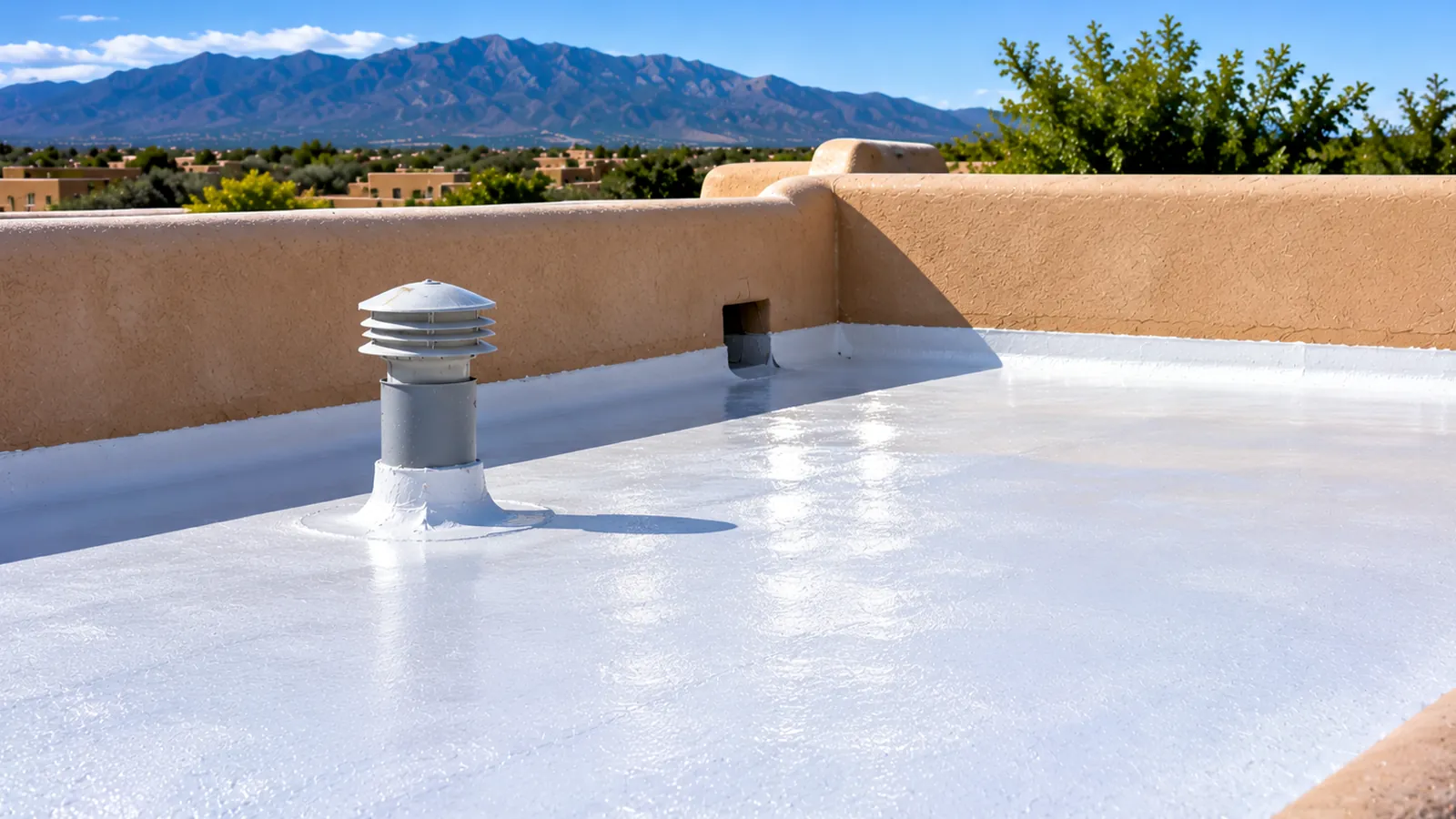
Side by side
| Acrylic | Silicone | |
|---|---|---|
| Cost | Lower | Higher |
| Standing water | Breaks down if water sits for days | Handles ponding well |
| Stays white | Good | Holds more dust |
| Future recoats | Acrylic or silicone | Silicone only |
| Weather to apply | Warm and dry | Wider range, still needs dry |
Choose acrylic when
- Your roof drains within a day or two of rain
- You want the most value per year of protection
- The roof already has acrylic on it
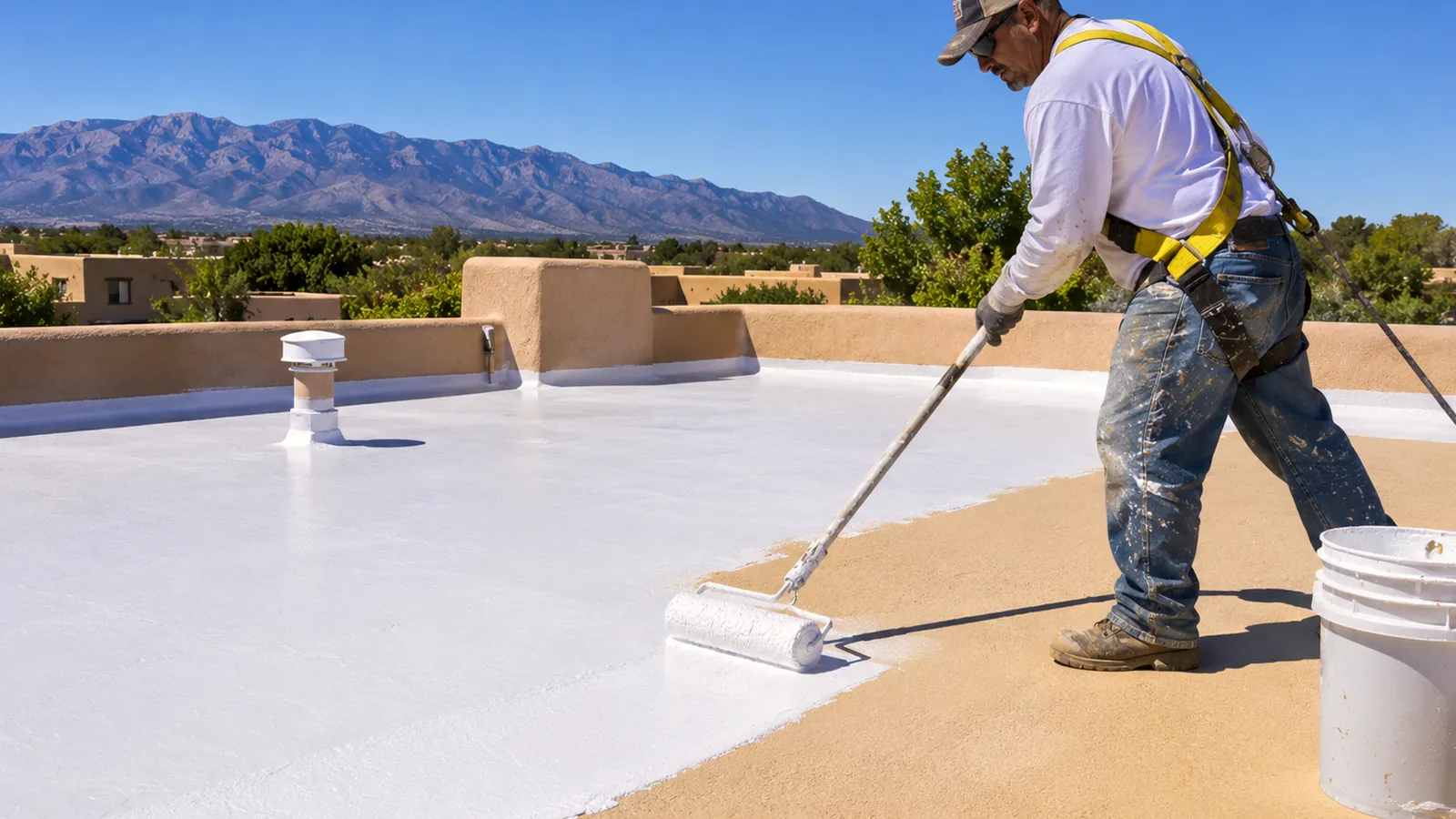
Choose silicone when
- Parts of the roof hold water and can't easily be built up
- The roof is already silicone
- Maximum ponding resistance matters more than cost
The third option: fix the drainage
Sometimes the best plan is to build up the low spots with foam, clear or replace a canale, and stay with acrylic. That solves the cause instead of coating around it. We'll price it both ways when it makes sense.
Rio Rancho dust
Silicone's tendency to hold dirt is noticeable here, where wind carries a lot of fine sand. It doesn't stop the coating from working, but if bright white matters for heat, acrylic stays cleaner. See cool roof savings.
Call (505) 448-1467. We'll check your drainage and recommend one.
Common questions
Can I switch from silicone back to acrylic?
Not easily. Very little bonds to silicone except more silicone.
Which lasts longer?
It depends on the roof. On ponding roofs, silicone usually does. On well-drained roofs, a thick acrylic coat lasts well too.