What hail does
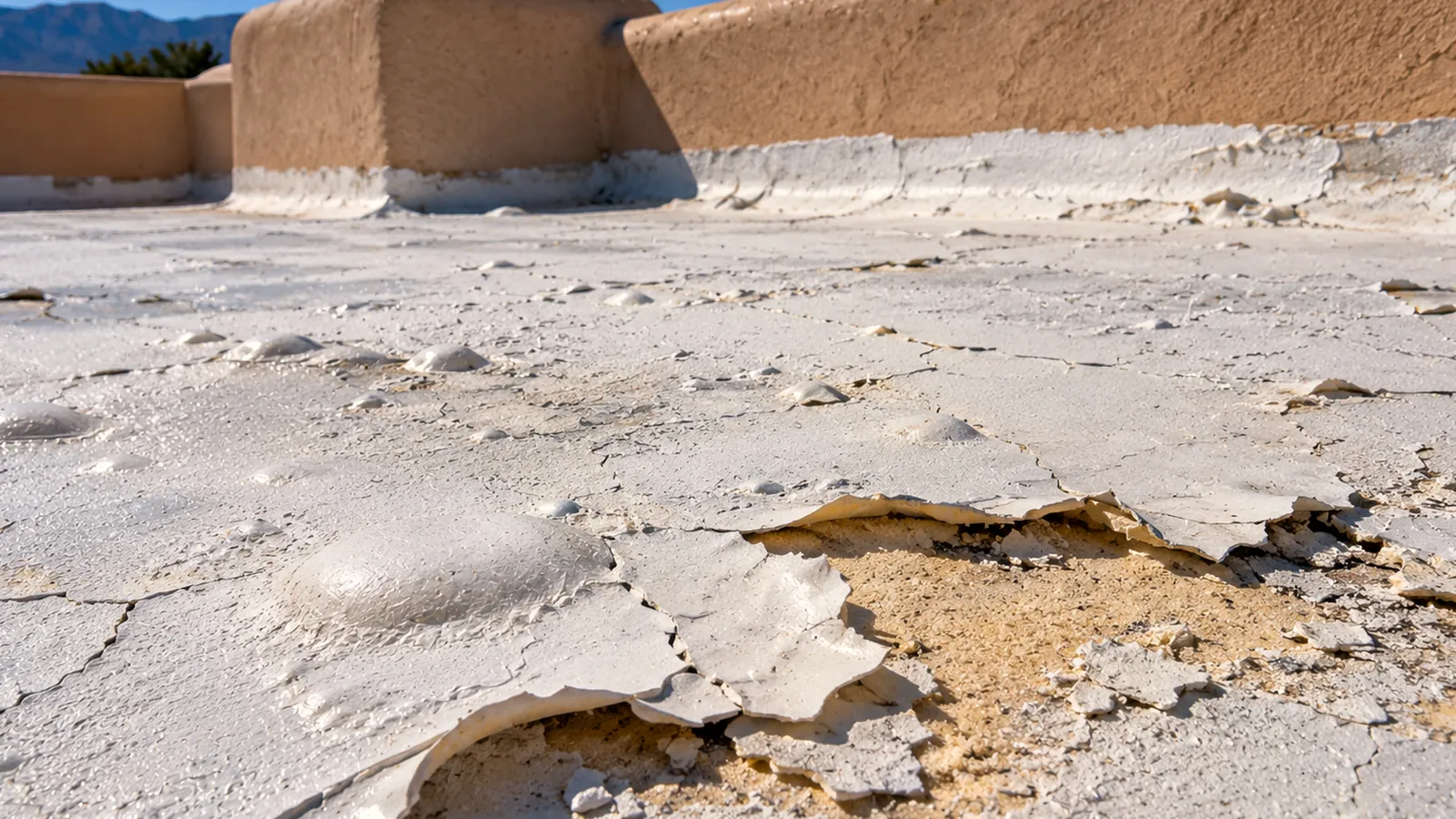
A foam roof is softer than shingles or metal. Hailstones can leave dents or small craters, crack the coating, and sometimes break into the foam. Water and sun then get into those openings. One small hole isn't an emergency. Hundreds across the roof can shorten its life.
How to spot it
- Small round dents or pockmarks across the roof
- Cracks radiating from impact points
- Damage concentrated on the side the storm came from
- Dented cooler housings, vents or skylight domes
- Hail marks on cars, patio furniture or sheds the same day
Document it
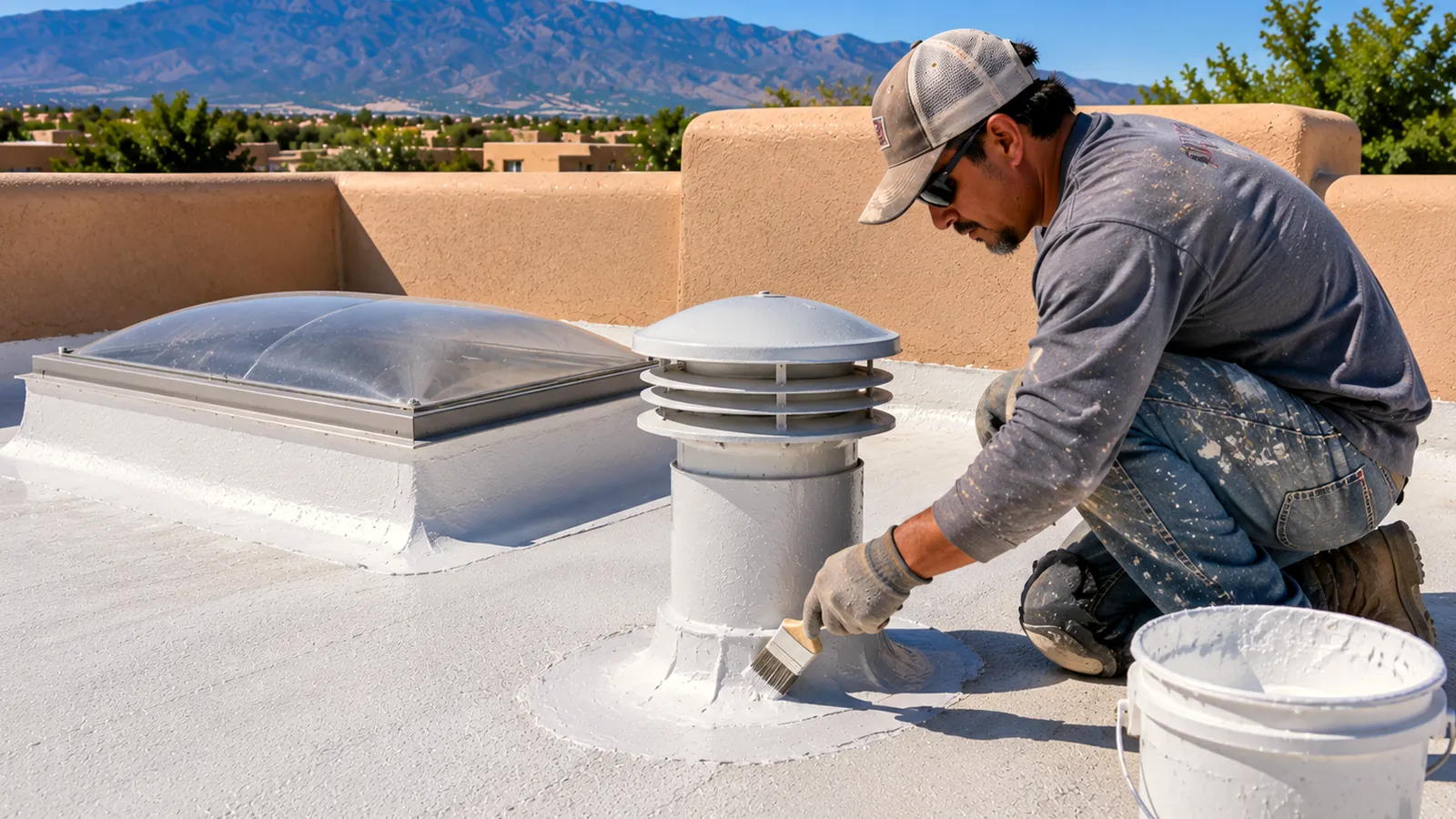
- Write down the date and time of the storm
- Photograph hail on the ground, with something for scale, if it's safe
- Photograph damage to cars, sheds and outdoor items
- Have the roof inspected and photographed soon after
- Keep all photos and notes together
Insurance basics
Sudden storm damage is often covered by homeowners insurance; wear and tear usually isn't. Your policy, deductible and adjuster decide what's paid. We can provide an inspection, photos and a written estimate for the repair. We don't decide coverage, and we don't promise any claim outcome.
Repair options
Light hail damage on a sound roof can be sealed and recoated. Heavier damage may need foam repair first. See foam roof recoating and leak repair.
After a hailstorm, call (505) 448-1467 for an inspection.
Common questions
How soon should I file a claim?
Check your policy. Many have time limits, so don't wait long after a storm.
Will you meet the adjuster?
Ask when you call. Having photos and an estimate ready helps any adjuster visit.
Is small hail a problem?
Small hail may not damage a thick coating. Larger stones are more likely to. An inspection will tell.