The three options
| Option | When it fits | Rough cost per sq ft |
|---|---|---|
| Recoat | Foam is firm and dry; only the coating is worn | about $2–$4 |
| New foam + coat | Foam is eroded or has ponding, but the roof is mostly dry | about $5–$9 |
| Tear-off + new roof (TPO or other) | Wet insulation or decking, too many layers, or structural problems | higher, depends on system |
Moisture is the deciding factor
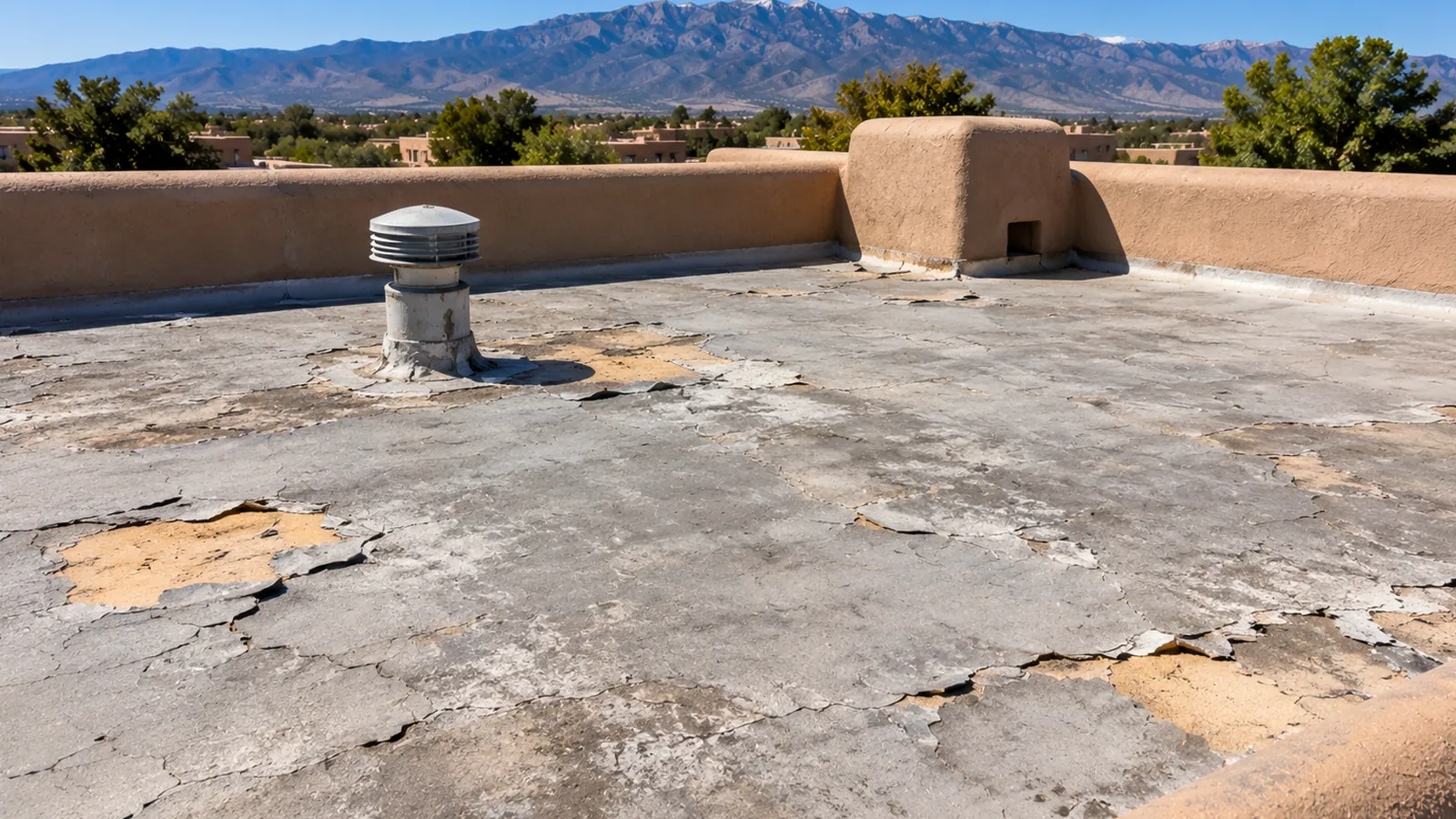
A dry roof can usually be recoated or foamed over. A wet roof cannot — trapping water under new material leads to blisters, rot and leaks. That's why the inspection probes the foam and looks for soft areas before anyone talks price.
When recoating is right
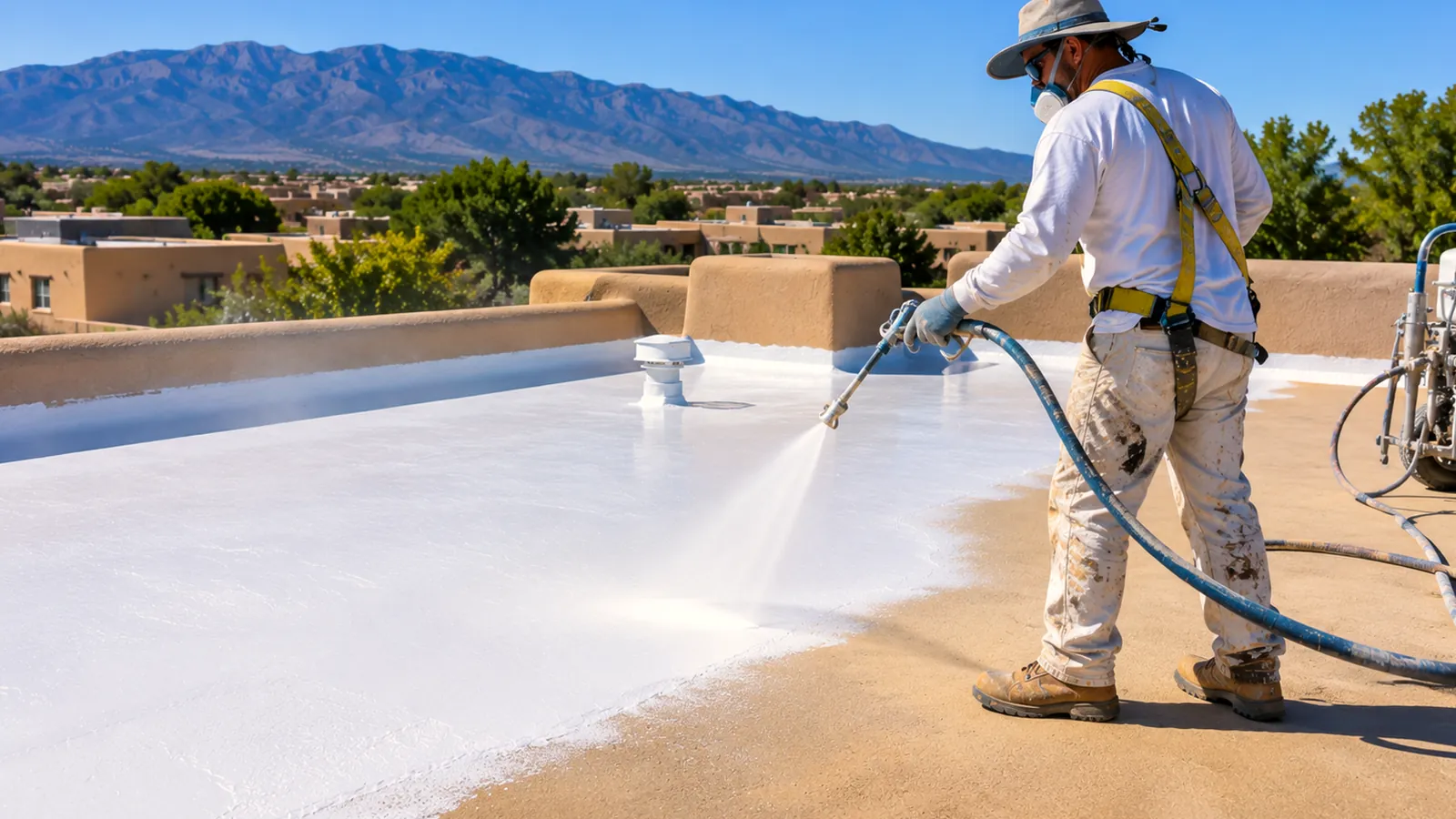
If the foam is solid and the coat is just worn, recoating is the clear winner. It's the least expensive, fastest and least disruptive option. See foam roof recoating.
When new foam is right
When the foam has lost thickness or the roof has persistent low spots, a new layer of foam restores insulation and slope. See spray foam roofing.
When a membrane like TPO makes sense
TPO is a single-ply white membrane that's mechanically fastened or glued and heat-welded at the seams. It's a solid choice when a roof has to be torn off anyway. It doesn't add insulation by itself the way foam does, though insulation board can be installed under it.
Call (505) 448-1467. The inspection tells us which path fits your roof.
Common questions
Can foam go over TPO?
In some cases, with the right prep. Each roof is different.
How long does each option last?
A recoat commonly 5–10 years before the next coat; foam and TPO systems longer with maintenance.