Why manufactured home roofs need it
Many older manufactured homes have a metal roof with very little slope, held together with long seams and dozens of fasteners. Newer ones may have a membrane or shingles. Either way, the roof sits only inches above the ceiling, so heat goes straight into the house and small leaks show up fast.
Out in Rio Rancho Estates and along the edges of Sandoval County, a lot of these homes sit in full sun and full wind with no trees to block either one.
Our process
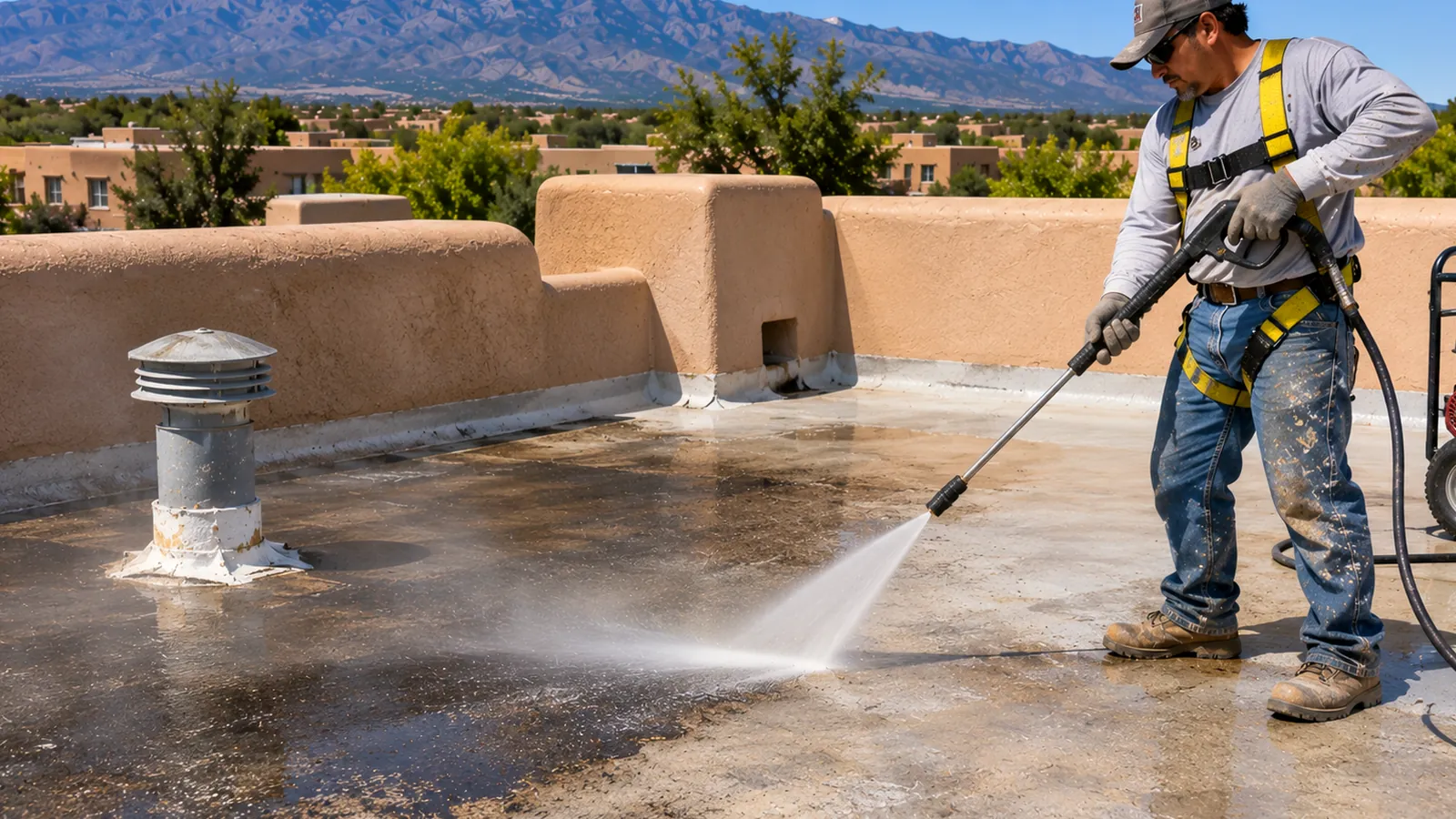
- Clean the roof thoroughly — dirt and chalk keep coatings from sticking
- Check for soft spots, rust and loose seams
- Tighten or replace fasteners; seal seams with reinforced tape or fabric
- Seal vents, the cooler or AC unit, and edge trim
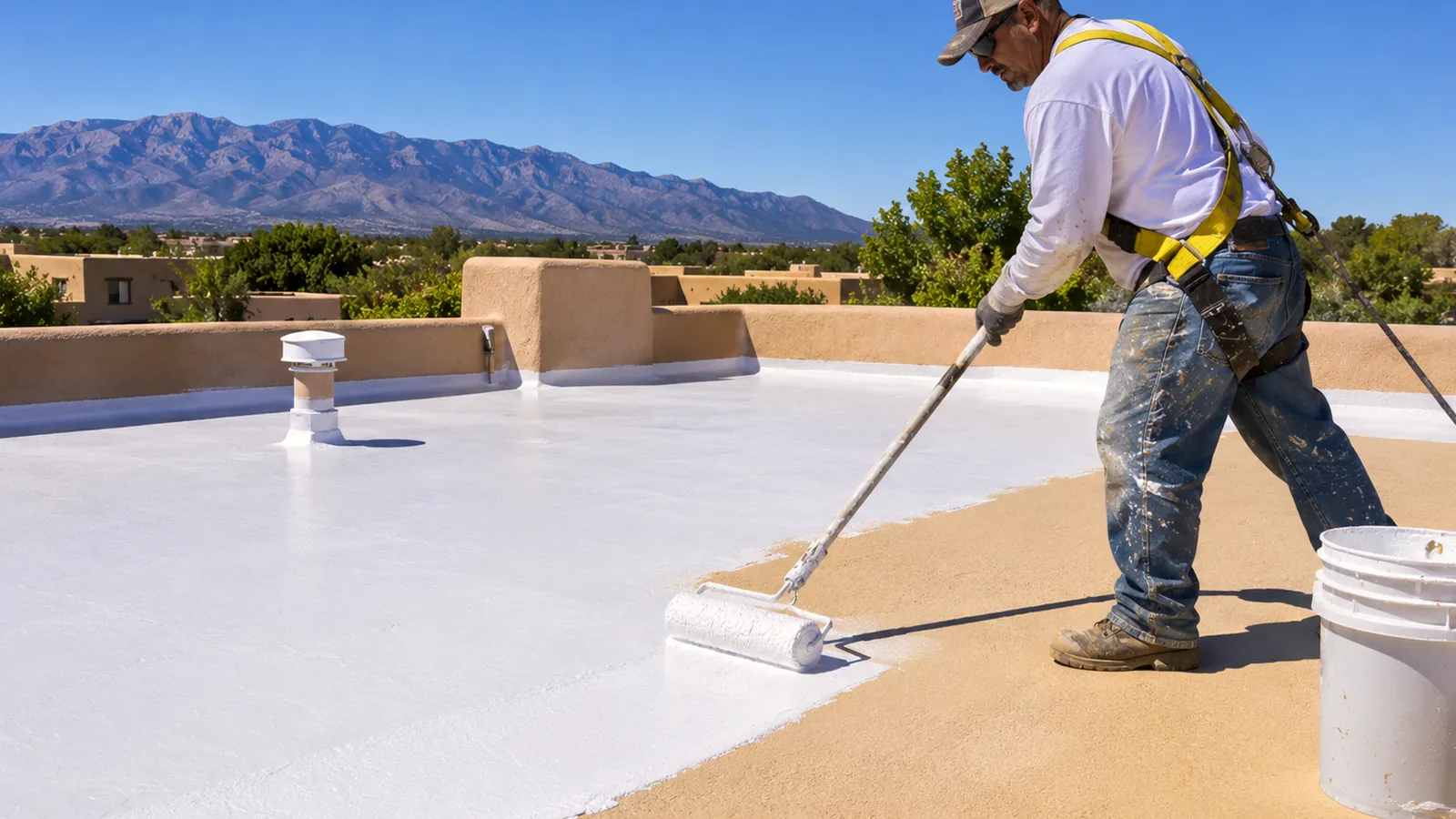
- Apply a white elastomeric coating over the whole roof
Roof-over or coat?
A coating is the lowest-cost way to stop leaks and cut heat on a roof that's still structurally sound. If the roof has many soft spots or the metal is rusted through, a "roof-over" system — a new pitched roof built over the old one — may make more sense. We'll be straight about which you're looking at.
Watch the weight
We walk manufactured home roofs carefully and use boards over weak spots. Heavy equipment stays on the ground. If a roof doesn't feel safe to walk, we'll say so.
Help paying for it
Some owners qualify for home repair help such as USDA Section 504 loans and grants for low-income rural homeowners. Eligibility rules and funding change, so check with the program directly.
Call (505) 448-1467 for a free look at your mobile home roof.
Common questions
How long does a mobile home roof coating last?
Commonly several years, depending on the product and thickness. Keeping the roof clean and resealing vents helps it last.
Will it really make the house cooler?
A white reflective coat often makes a noticeable difference in rooms under a thin metal roof.
Do you do roof-overs?
Call (505) 448-1467 to talk through options. We'll tell you if a coating is enough first.