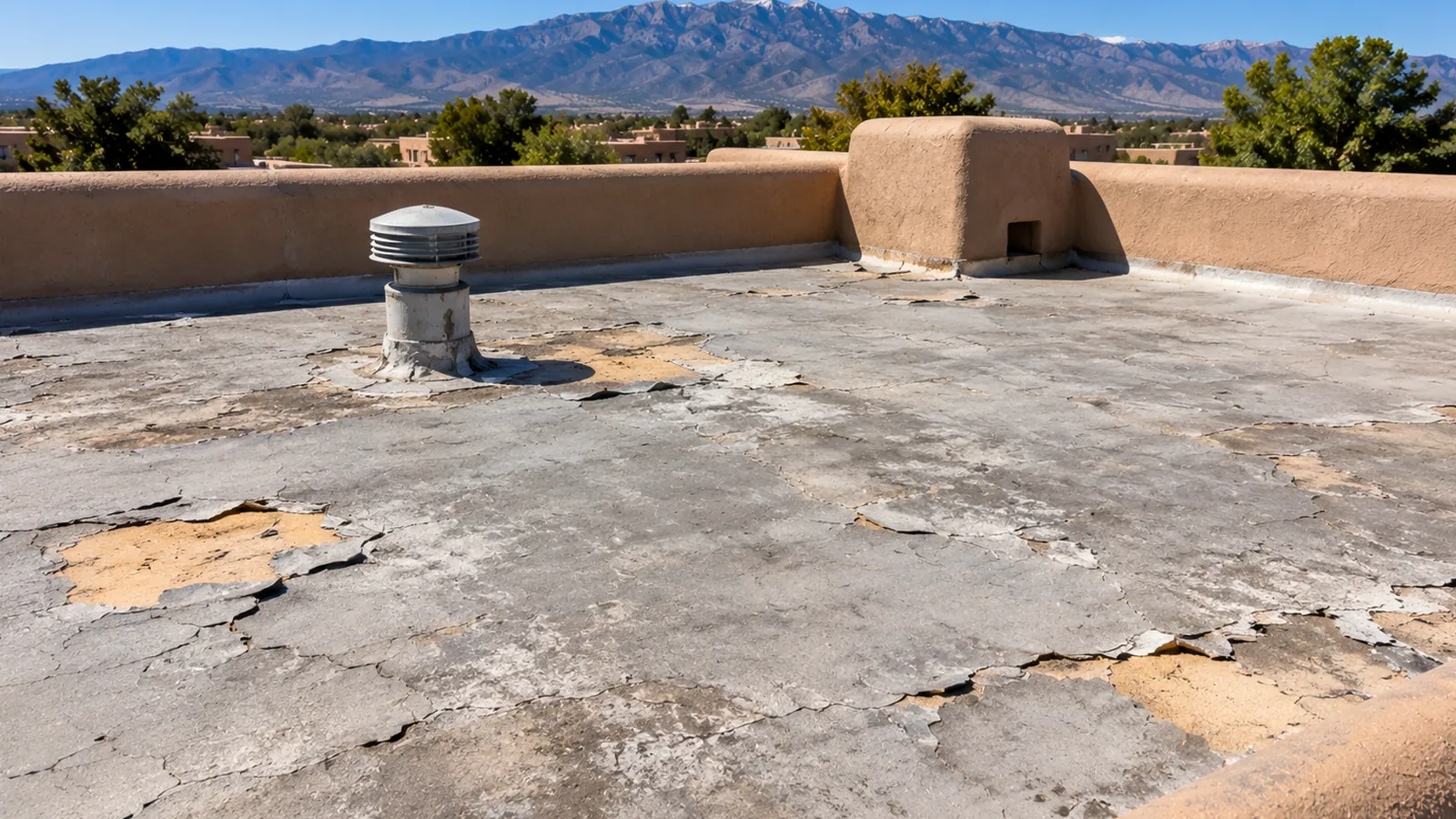
Sandblasting, slowly
A roof coating is only a thin layer — often well under a tenth of an inch. Wind-driven sand acts like very fine sandpaper. One windy day doesn't do much. Years of spring wind seasons can wear the coating down, especially on the side of the roof facing the prevailing wind and along the top edges of parapets.
Signs of wind wear
- One side of the roof looks thinner or grayer than the other
- Foam showing along the windward edge or on parapet caps
- Sand drifts piled against parapets and in corners
- Canales packed with sand
- Small lifted edges where old coatings were thin
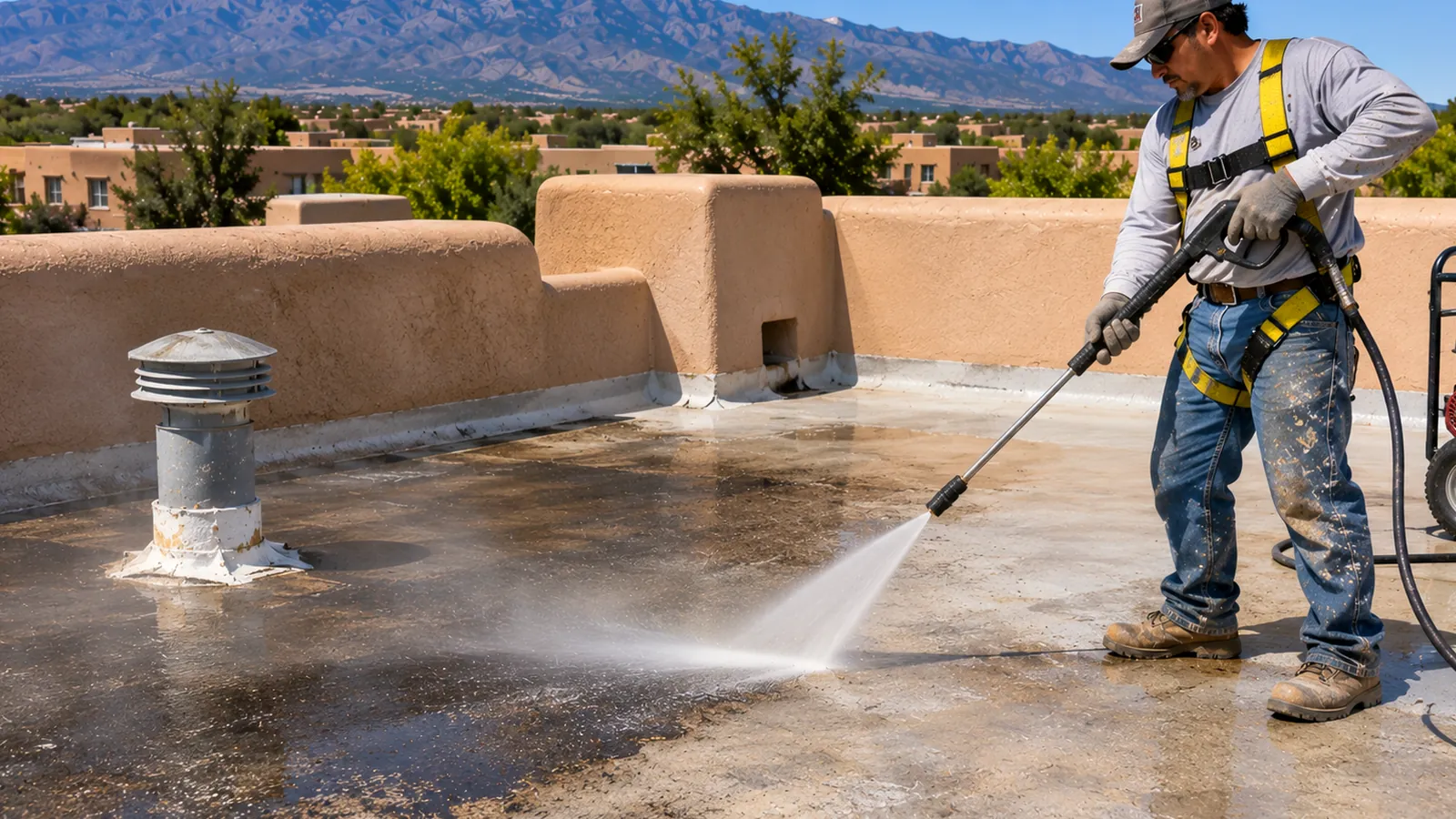
Sand in the wrong places
Drifted sand does more than wear the surface. It blocks canales, so water backs up after storms. It holds moisture against the roof. And it grinds into the coating every time someone walks on it.
Protecting the roof
- Look at the roof after wind season, or have it checked
- Sweep or wash sand out of corners and canales
- Touch up thin spots before the foam is exposed
- Recoat with extra thickness on the windward side and edges
- Add walk pads where people regularly cross the roof
Wind and spray work
Wind also affects when coatings can go on. Spraying in gusty weather wastes material and risks overspray on cars and neighbors. On windy days we roll, or we wait. See what happens on coating day.
After a rough wind season, call (505) 448-1467 for a roof check.
Common questions
Does wind damage count as storm damage for insurance?
Sudden damage from a specific windstorm may be covered; gradual wear from sand usually isn't. Check with your insurer.
Should I clean sand off the roof myself?
If you can get up safely, sweeping sand out of canales helps. Don't use sharp tools on the coating.