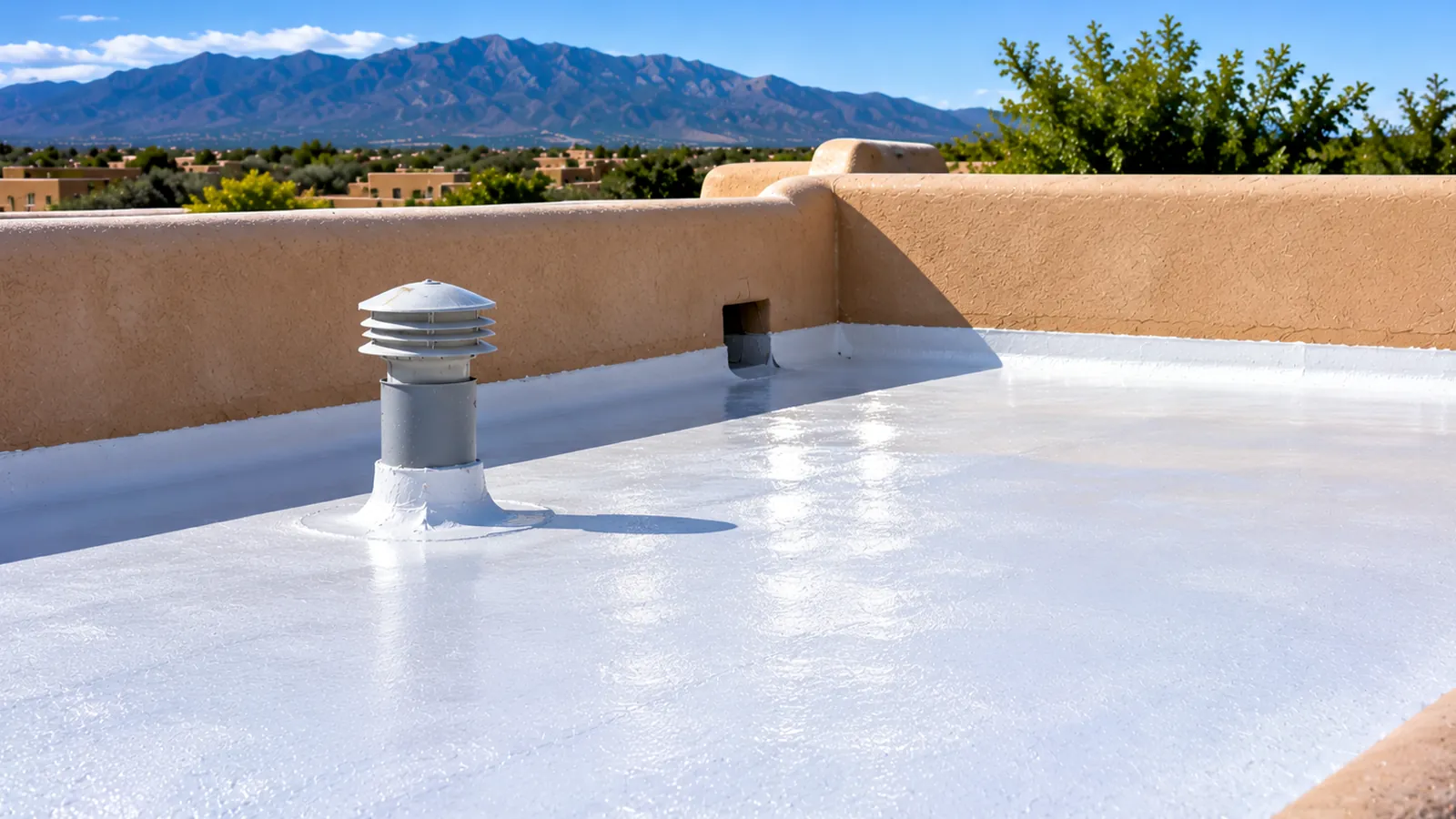
Why silicone
Silicone coatings resist breakdown from standing water far better than acrylics, and they shrug off ultraviolet light. On a roof with stubborn low spots — common around canales, behind parapets and on additions tied into the main roof — silicone keeps protecting where an acrylic would soften and wear early.
Things to know first
It's a one-way street
Very little sticks to silicone except more silicone. Once a roof is silicone, future recoats will be silicone too.
It collects dust
Silicone can hold onto dirt, and Rio Rancho has plenty of blowing sand. It still protects, but it won't stay as bright white as a fresh acrylic.
Cost
Material costs more than acrylic, so the total is usually higher per square foot.
Prep still matters
Silicone won't fix wet foam or a missing canale. Repairs come first.
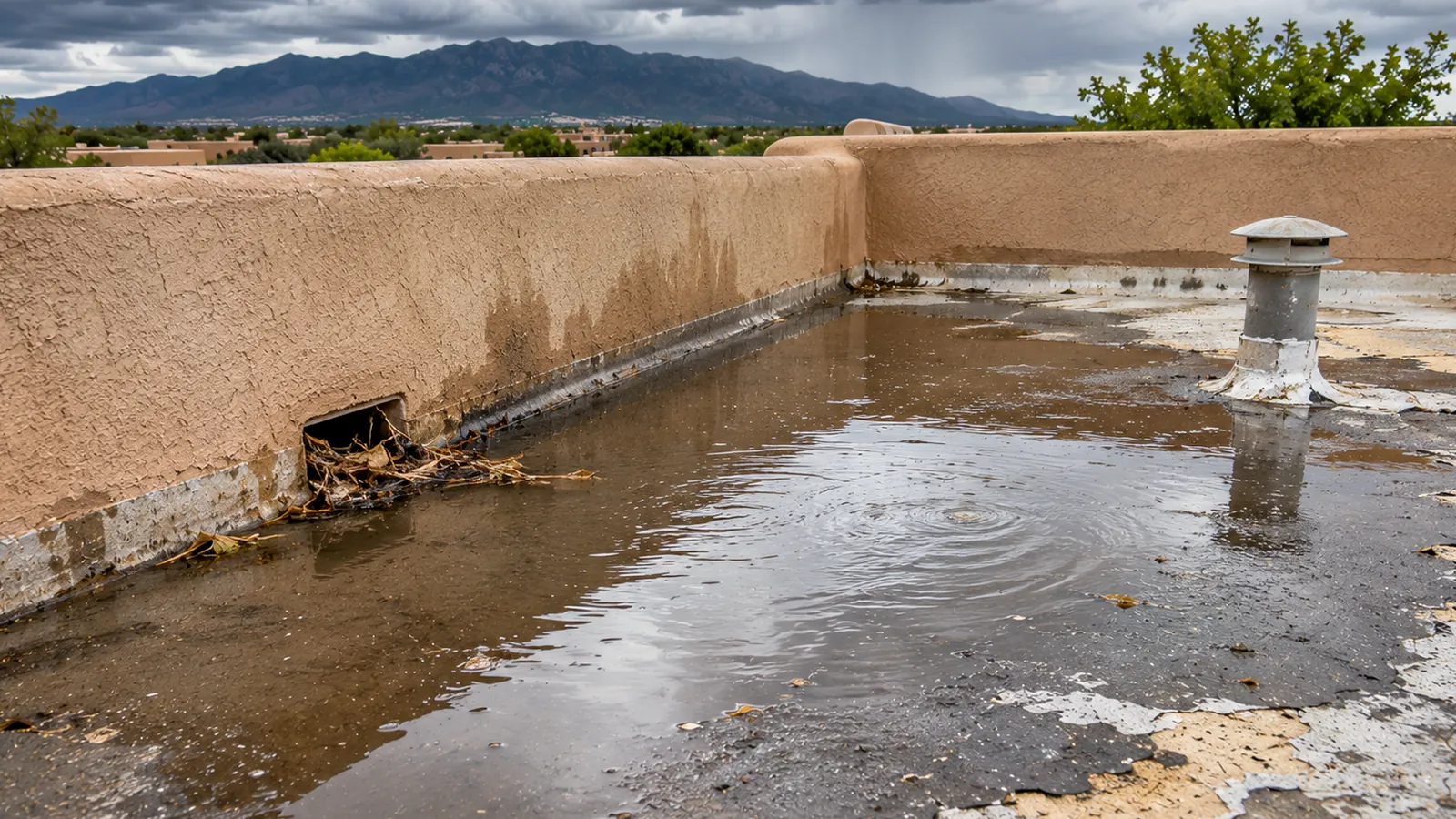
Fix the drainage or coat for it?
Sometimes the better answer is to build up a low spot with foam or clear a clogged canale and stay with acrylic. Other times the roof is just flat by design, and silicone is the right call. We'll show you where the water sits and price both ways so you can choose. See acrylic or silicone for a side-by-side comparison.
Where we use it most
- Roofs with ponding near canales or drains
- Low-slope additions, patios and garage roofs
- Roofs already coated with silicone
- Small commercial and multi-unit flat roofs
Call (505) 448-1467 after the next rain, while the puddles are still there. It's the easiest way to see where water sits.
Common questions
Is silicone worth the extra cost?
On roofs that pond, often yes, because it holds up where acrylic wears out. On roofs that drain well, acrylic is usually the better value.
Can you put silicone over acrylic?
Yes, with proper cleaning and sometimes a primer. Going the other way is the problem.
Does silicone come in white?
Yes. It starts bright white, but it tends to hold more dust over time than acrylic.